Showing posts with label CAMERA. Show all posts

Thursday, 20 September 2012

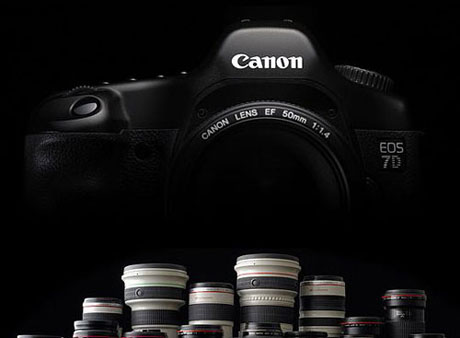
Canon EOS 7D DSLR

The Canon EOS 7D is an 18.0 effective megapixel APS-C crop CMOS digital single-lens reflex camera made by Canon. It was announced on 1 September 2009 with a suggested retail price of US$1,699 Its particularly notable features are HD video recording, its 8.0 frames per second continuous shooting, new viewfinder which offers 1.0X magnification and 100% coverage 19 point auto-focus system, movie mode, and built-in Speedlite transmitter.


An 18.0 megapixel Canon-developed CMOS sensor together with Dual DiG!C 4 Image Processors combine to deliver outstanding image quality with fine detail and brilliant reproduction of colour and tones. Features also include 19 point Auto Focus, with an ISO range expandable to an incredible 12,800 and Full High Definition movie recording making the Canon EOS 7D an essential for the promising enthusiast.
18.0 effective megapixel APS-C CMOS sensor Dual DIGIC 4 image processors with 14-bit processing Liveview mode 100% viewfinder frame coverage with 1.0× magnification 1080p HD video recording at 24p, 25p and 30p with drop frame timing 720p HD video recording at 50p (50 Hz) and 60p (59.94 Hz) 480p ED video recording at 50p (50 Hz) and 60p (59.94 Hz) 8.0 frames per second continuous shooting ISO sensitivity 100–6400 (expandable to 12,800) 3.0-inch Clear View II LCD screen with 640 × 480 (921,600 dots) resolution 19 point auto-focus system, all cross-type 63 zone color sensitive metering system built-in Speedlite transmitter Magnesium alloy body Popup flash Weather Sealing.
With a host of features designed to enhance every facet of the photographic process, from still images to video, the EOS 7D represents a whole new class of camera. Made to be the tool of choice for serious photographers and semi-professionals, the EOS 7D features an 18.0 megapixels APS-C size CMOS sensor and dual DIGIC 4 image processors, capturing tremendous images at up to ISO 12800 and speeds of up to 8 fps. The EOS 7D has a cross-type 19-point AF system with improved AI Servo AF subject tracking and user-selectable AF area selection modes for sharp focus no matter the situation. The EOS 7D's Intelligent Viewfinder provides 100% coverage and displays user-selected AF modes as well as a spot metering circle and on demand grid lines. iFCL metering with 63-zone dual-layer metering system uses both focus and color information to provide accurate exposure even in difficult lighting. The EOS 7D also captures Full HD video at 30p, 24p and 25p with an array of manual controls, including manual exposure during movie shooting and ISO speed selection. The EOS 7D features a magnesium alloy body that is dust- and weather-resistant and shutter durability of up to 150,000 cycles.

The Canon 7D denotes a new creative class of DSLR camera with a throng of brand new features designed to make each and every photographic experience better, including still photos and video, Designed to be the preferred instrument of choice for earnest photographers including semi-professionals, the Canon 7D launches a completely new 18.0-megapixel CMOS APS-C size sensor plus Double DIGIC 4 image processors for capturing incredible images as high as to 12800 ISO with speeds ranging up to 8 frames per second. The EOS 7D encompass a ground-breaking 19-point AF all cross-type system including user-selectable AF scene selection controls for spot-on focus , enhanced AI Servo AF target tracking no matter the situation. The Intelligent viewfinder of the EOS 7D, with a completely new inspired technology, provides 100% coverage and also displays AF modes selected by the user including a circle for spot metering and grid lines on demand. New i63-zone dual-layer iFCL metering system employs both color information and focus to impart accurate exposure even in poor lighting. The Canon 7D also shoots Full HD video at 29.97 frames per second, 23.976 frames per second and 25p with a selection of manual controls that includes ISO speed selection and manual exposure while shooting movies. The EOS 7D is constructed with a weather and dust resistant body of magnesium alloy and the shutter durability goes up to 150,000 cycles. Harmonizing with more than 60 EF / EF-S canon lenses along with other accessories for the EOS System, the inspired occasions--with not only stills but also video--are beyond bewilderment. Plus Enjoy the amazing poor-light ability -->

Saturday, 15 September 2012

CANON EOS 600D

The Canon EOS 600D allows anyone to capture breathtaking images with creative freedom. With an 18.0 megapixel Canon developed CMOS sensor and DiG!C 4 Image Processor, users can create inspiring images with incredible detail even in low light. The EOS 600D is perfect for those looking to pursue the creative world of DSLR photography. Lenses sold separately


EOS 600D can record full HD 1920x1080p videos that offers manual control where exposure and frame rate of 30.25 and 24 fps at full resolution, and 60 and 50 fps at a resolution of 720p. Other than, the EOS 600D provides several filter effects to make the photos more interesting to the RAW image and all JPEG images. Features filter can be applied after the user performs image capture and apply different filters to the same picture with some selection effects


600D Camera Body (Exterior) Some photographers (including me) expected a redesigned camera body. In fact, the Canon 600D looks almost identical to the camera it replaces, the 550D (T2i). When you look at the front, you can see that the camera is a bit larger (133.1 x 99.5 x 79.7 mm) than the 550D (128.8 x 97.3 x 62 mm). So according to the specs, the T3i is 2.3mm wider, 2.2mm wider and 17.7mm larger in depth (probably due to its swiveling LCD). In terms of ergonomics, it would feel the same as the T2i. The 600D is also ~40g heavier than the 550D. When you look at the backside, you can see that the buttons are arranged almost the same, just a minor placement change due to the swivel-tilt LCD switch on the right side. Talking about the LCD, Canon has equipped the EOS 600D with a Vari angle 3-inch (7.7cm) 3:2 Clear View TFT display with 1040k dot resolution. This is most probably the same LCD screen used on the 60D. The LCD has 170° Horizontal and Vertical viewing angles and has Anti-reflection and anti smudge coating. I am sure that videographers will be happy to see that Canon has decided to use that type of screen on this entry-level DSLR too. 
 From personal experience with the 60D, I must say that the LCD is very useful for shooting in awkward shooting angles, both in stills and videos. Its built quality is very good and it has a tacky and sturdy feeling to it when tilting and swiveling it. The LCD image quality is also excellent. I really enjoyed viewing image and videos on the 60D and I am sure that you'll get the same experience with the 600D as well. TIP: Even though this is a swivel screen and you can collapse and close it with the viewable part towards the camera, I recommend getting a protecting cover for it. I bought an InvisibleShield 3.5" screen protector which perfectly fits this screen. Yes, 3.5-inch, not the 3.0. I didn't want the 3.5-inch, but that what they have at the store. After buying it and putting it on, I've realized that this is the perfect size for it (apparently). I didn't try the 3-inch one, but the 3.5-inch does fits this LCD. Just note that this is not a recommendation, just this is what worked for me. Ask your dealer about a screen protector for the 600D. The camera body has USB 2.0, Video Out, remote control, mini HDMI and 3.5mm stereo connectors. The 600D works on SD/ SDHC / SDXC memory cards (no dual slot) and support the BG-E8 grip. Does the 60D battery grip works with the 600D? - According to the specs, No. The 600D supports the BG-E8 grip, while the 60D supports the BG-E9 grip (BTW: excellent grip, very comfortable). The camera itself weights 570g including battery and memory card. Overall, the 600D looks almost identical as the 550D, but with minor changes in size, weight, button placement and button size.

Thursday, 13 September 2012

Nikon D600 Specifications

Nikon D600: Key Specifications
 24.3MP Full-frame CMOS sensor (10.5MP DX-format crop mode)
    ISO 100-6400 (expandable to ISO 50-25,600 equivalent)
    Maximum 5.5fps continuous shooting
    39-point AF system with 9 cross-type AF points
    3.2in 921k-dot LCD screen
    1080p30 full HD video mode with stereo sound recording
    Headphone jack for audio monitoring in movie mode
    Uncompressed video recording via HDMI
    Single-axis electronic level in viewfinder, duel-axis (pitch and roll) in live view
    Dimensions: 141mm x 113mm x 82mm (5.5 × 4.4 × 3.2 in).
    Weight: 760 g (1.6 lbs) (camera body only, no battery)

A full-frame camera for the rest of us?

At its list price at launch of $2099 the D600 is one of the most affordable full-frame cameras yet, and there's no doubt that it's a product which a huge number of photographers (not only Nikon users) have been waiting for. Although Nikon insists that there are still good reasons to buy the D300S, it seems very likely that the D600 will finally supplant the older DX-format model as the 'upgrade of choice' for users of the D3200, D5100 and D7000. But despite its relatively low cost the D600 is very far from a 'no frills' model. Features like 5.5fps shooting at full-resolution, 100% viewfinder coverage, full HD video capture with an option to record uncompressed footage via HDMI and a customizable 39-point AF system would be pretty impressive in a camera costing much more.

Nikon's last big DSLR release was the D800. The big news with that camera was its pixel count of 36MP, which when it was released, comfortably eclipsed everything else around (and at the time of writing still does). The D600 doesn't quite reach those dizzy heights, but at 24MP, it matches or exceeds the pixel count of every other full-frame system camera. It is also one of the most versatile, offering a useful 10.5MP DX crop mode and an in-body AF motor, which ensures AF compatibility with older, non-AF-S Nikkor lenses. These factors alone will give it serious appeal to two camps - D800 or D4 owners looking for a smaller, lower-cost second body, and D300S and D7000 owners who want to step up to full-frame but don't want (or can't afford) to replace all of their DX-format lenses.


Ergonomically, the D600 will be very familiar to both of these constituencis. The D600's UI is all but identical to the DX-format D7000, and It shares the same 39-point AF system. In terms of functionality though, the D600 also has a lot in common with its big brother the D800, particularly when it coms to video specification. Something that we didn't expect on the D600 was the ability to shoot uncompressed video footage via HDMI. This, plus a mic socket for an external microphone, and a headphone jack should make the D600 very appealing to videographers. The only real difference between the implementation of the D600's video mode compared to the D800 is that you can't adjust aperture during movie recording on the new model (unless you use an older manual focus lens with a mechanical aperture ring).
D600 versus D7000: Specification highlights

24.3MP Full-frame CMOS sensor (compared to 16.2MP DX-format CMOS) Maximum 5.5fps continuous shooting (compared to 6fps) 3.2in 921k-dot LCD screen (compared to 3in) D800-style combined movie/still live view mode button Headphone jack for audio monitoring in movie mode Uncompressed video recording via HDMI D600 versus D800: Specification highlights 24.3MP Full-frame CMOS sensor (compared to 36.3MP CMOS) 10.5MP DX-format crop mode (compared to 15.3MP) 39-point AF system with 9 cross-type AF points (compared to 51-points, with 15 cross-type) Autofocus sensitivity down to -1EV (compared to -2EV) Maximum 5.5fps continuous shooting in FX mode (compared to 4fps in FX mode) 2,016-pixel RGB TTL exposure metering sensor (compared to 91,000 pixels) 2x SD slots (compared to CF+SD) No 'Power Aperture' aperture control during movie shooting (offered by D800 using Fn + Preview buttons) Shutter rated to 150,000 cycles (compared to 200,000 cycles) Magnesium-alloy top and rear, polycarbonate front-plate (D800 is full mag-alloy except flash housing) USB 2.0 interface (compared to USB 3.0)

NIKON D600


With the ever-encroaching reach of interchangeable lens cameras (ILCs), it's about time that the SLR world brought out some big guns to lure the headlines away from the little guys. Photographers who are looking for an upgrade from their entry-level SLRs have most likely heard of full-frame cameras, but price-wise they have often been far out of reach. Enter a camera such as the Nikon D600, which has a 24.3-megapixel full-frame CMOS sensor. Full-frame sensors have the advantage of being larger than their APS-C or crop-sensor cousins. In a nutshell this means that they are able to gather more light thanks to the larger photosites, and are not susceptible to crop factor. This means that when you mount a 50mm lens on a full-frame camera, it's a true 50mm focal length. Borrowing a lot of the same shooting configuration and look-and-feel of other full-frame Nikon SLRs like the D800, it does have a new locking mode dial design. That means there's a button that you need to depress every time you want to turn the mode dial, similar to what's found on some Canon SLRs. Along with the requisite still image-taking capabilities, the D600 can shoot full HD video (1080p) at 24, 25 or 30 frames per second. Recording can also be done in DX crop, which uses the centre portion of the sensor to provide a 1.5x focal-length crop, still able to record at 1080p. An uncompressed and clean video out is available through the HDMI port, with headphone monitoring also available. At the back is a 3.2-inch, 921,000-dot LCD screen, and the D600 comes with dual SD card slots Connectivity has been all the rage in 2012 camera models, with the D600 being no exception. An optional Wi-Fi transmitter attaches to the USB port and can send images to any number of wireless devices using a dedicated Nikon app. It also offers remote, wireless tethering. There's also a built-in time-lapse functionality to snap images at set intervals. Continuous shooting is at 5.5 frames per second, while there's a 39-point AF system with 9 cross-type points on board. Nikon Australia no longer issues official RRPs for its products, though one Australian retailer is offering it for AU$2599 for body-only. The D600 will be available in Australia from Tuesday 18 September.